Showing off the work Milton Keynes and Bedford Boroughs are doing to champion integration through the use of innovation as a tool
Innovation as a Tool for Integration
By Transport Implementation Lead Trevor Brennan
Transport networks work best when different modes—buses, trains, walking, cycling, and new mobility technologies—connect seamlessly. Across the England’s Economic Heartland (EEH)region, local authorities are continually exploring innovative ways to make everyday travel easier, more reliable, and better connected.
Two recent initiatives in Milton Keynes and Bedford show exactly how forward‑thinking solutions can bring different parts of the transport network closer together. By improving first‑and last‑mile connections, enhancing access to real‑time information, and creating new ways to move around towns and cities, these projects are helping to shape a more integrated transport future for everyone.
Autonomous Shuttles: Connecting People and Places
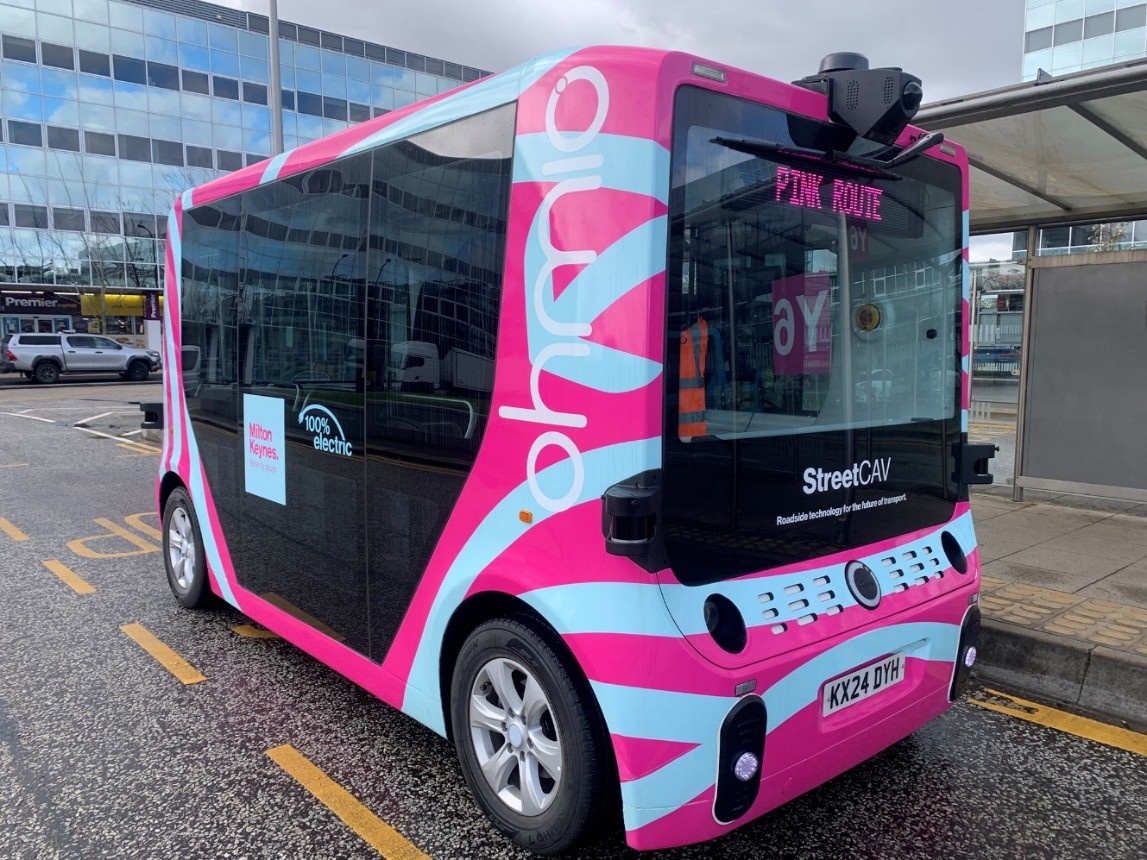
Milton Keynes’ StreetCAV Plus trials of self-driving shuttles offer a compelling example of how new technology can strengthen integration – and further strengthens the city’s reputation as a national innovation leader.
I recently had the chance to ride one of the project’s self‑driving shuttles—and the experience was genuinely impressive. I booked a journey from Milton Keynes Central Station Square up to the shopping centre and back again. Right on schedule, the shuttle glided up to the stop,its doors opening automatically as I was welcomed on board by staff from Ohmio—the vehicle manufacturer—and Milton Keynes City Council, who are leading the project with Smart City Consultancy to explore how autonomous shuttles can operate safely on fully trafficked city centre streets of Milton Keynes.
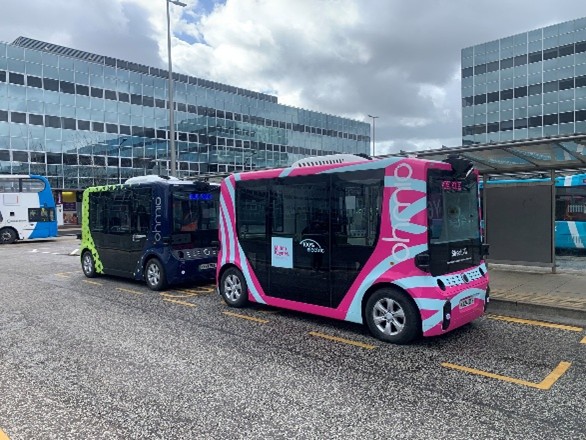
Through these ambitious trials,the city is demonstrating how autonomous transport can transform mobility—creating safer streets, cutting emissions, improving accessibility for ALL. A standout feature of the StreetCAV Plus programme in Milton Keynes is its ground‑breaking work on remote operation models that will form a cornerstone for autonomous mobility across the UK. At the heart of this lies a new, purpose‑built remote operations hub in the city centre, where trained staff monitor each shuttle in real time and can provide support whenever needed.
On my own journey, the team never had to intervene—a truly encouraging sign of the system’s reliability, resilience, and readiness for wider rollout.
During these public-facing trials, which ran until 26 March, the shuttles travelled in fully autonomous mode, with Ohmio staff stepping in only when absolutely necessary—for example,at signalised junctions. As integration between vehicles and the road network advances, even these small moments of human intervention are expected to fadeaway entirely.
My journey was completely hassle free, with the shuttle operating safely and smoothly along its route.Experiencing the vehicle safely interacting with other road users without the input of a driver was surreal to begin with – but in the end you forget there isn’t a human in control! It was a brilliant demonstrator of the technology’s potential.
At its core, the project aims to make first‑and last‑mile journeys easier, helping people navigate smoothly between rail, bus, and key destinations without needing a private car. From my experience, this ambition is not only achievable—it’s already becoming a reality.
Projects like StreetCAV Plus and the Connector Project in Cambridge show that when vehicles, data, and infrastructure work together intelligently, travel becomes more predictable, more inclusive, and genuinely more user‑centred. In my view, this is exactly the kind of integrated transport ecosystem future cities need.
Real-Time Information: Making Public Transport Easier to Use
In Bedford, innovation is happening through improved public transport passenger information. EEH supported the funding bid for the The Journey Alerts service in Bedford which gives people real‑time public transport updates via WhatsApp, Messenger, via QR codes placed at bus stops, on buses, and at key local venues.
This type of approach helps strengthen traditional timetables, printed information, and digital displays by offering a cost‑effective, reliable alternative. It reduces uncertainty, supports better coordination between buses and trains, and provides valuable assistance for people who may find travel challenging or are unfamiliar with the local transport network.
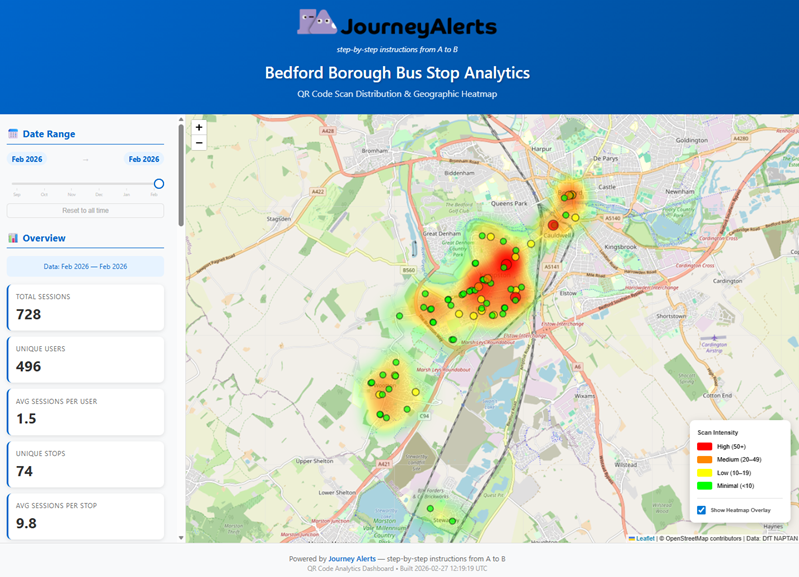
Eventually, all bus stops in the Bedford area will be fitted with a QR code that links to tailored, live arrival information,enabling passengers to make quicker and more informed choices. Alongside the clear passenger benefits, local authorities can also gain valuable insights through improved journey analysis, helping to identify the most requested routes, the most frequently scanned stops, and areas with high levels of passenger interest or footfall across the network. Subject to further discussions, there is the potential for this service to be rolled out more widely across the region.
Bedford Borough Bus Stop Analytics: QRCode Heatmap
Together, initiatives such as those in Milton Keynes and Bedford demonstrate how innovation can deliver real,practical benefits for travellers across the EEH region.
Whether through smarter, more accessible real‑time information or the introduction of autonomous shuttles that bridge key gaps in the network, these projects show what is possible when technology, infrastructure, and user needs are aligned. As more authorities adopt similar approaches, the region moves closer to a transport system that is not only better connected, but also more intuitive, inclusive, and responsive to the way people actually travel. The progress made so far provides a strong foundation for the next generation of integrated mobility—one where seamless journeys become the everyday experience rather than the aspiration.